Are we delivering our promises?
This is our third annual report on the trust’s work, with partners, to deliver the promises which form our clinical and organisational strategy 2023 to 2028 to nurture the power in our communities.
This report is trust produced but it contains peer-led feedback on our work over the past 12 months, including from those members of our local communities who have been contributing within our decision-making leadership groups: part of promise 5.
The report outlines the success measures for all of our promises, provides an easy read summary of the strategy, and offers an honest assessment of work carried out to improve care.
Introduction
This is our story so far. For the third time we are reporting back openly on the work to deliver the promises that we made to local communities, to patients and to carers in our strategy.
Once again, our peer-led partner, the People Focused Group has provided feedback on some of this work, using the voices of those who work with us. As we launch work to deliver promise 2, our focus on carers, the feedback is clear that we have much more to do to succeed. Unpaid carers are by far the biggest health service everywhere we live and work. Among our own staff and in working with our patients, we know we could be much more successful in identifying and supporting them.
Other parts of the trust’s annual reporting cycle draw attention to delivery in 2025 of some of our promises. With now just over 2 years left in our 5-year time period, we are starting to see a conclusion of hard work by very many people. There are few if any promises which have not found expression within our services. There are plenty not yet finished. However, some now are, and we have begun the hard work of sustaining that success. In particular, 4 promises have made great progress since we last reported.
We are an accredited Living Wage employer, and for the last 2 years have paid the NHS’ lowest paid staff that higher, living, wage. This, together with a continued transfer of expenditure to local businesses, are the basis for Promise 25.
Since October 2025 we have had over 350 volunteers, drawn from a diverse range of backgrounds. This is what we committed to in Promise 3. It is clear that we now have volunteering in parts of our care and spaces in our communities that we never had before. It is clear that this is proving a gateway into employment and a really important insight into some communities.
At the time of writing, we have no, in NHS jargon, inappropriate out of area placements, and very few people whose lives are dislocated by care miles from home. This is the spirit of promise 19, and because Scunthorpe is a long way from Rotherham, our approach goes beyond the definitions used by other NHS organisations, focusing on, out of someone’s own area, not out of NHS organisations.
The trust’s staff can now proudly say we have the shortest wait times in the NHS, with a 4-week wait being our maximum for many, but not yet all services We are investing to shorten waits in podiatry and to tackle the very long waits in neurodiversity assessment and care. These are the important exceptions to our delivery of promise 14. But the success of moving other services to a consistent trusted position of less than 4 weeks is an extraordinary achievement.
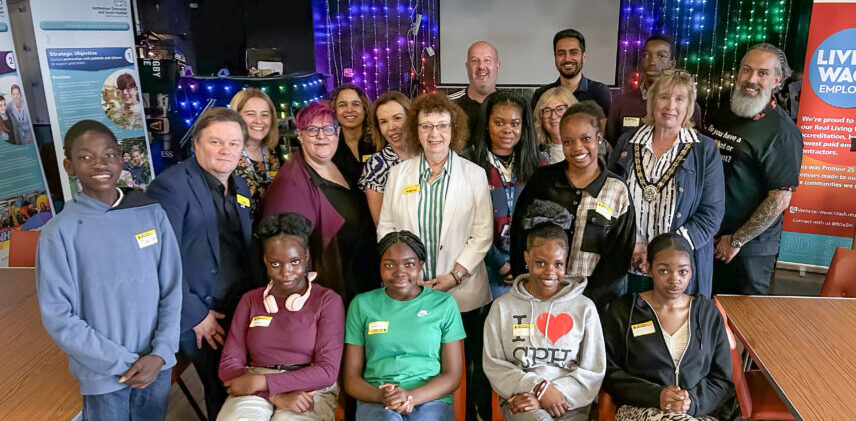
In the next few months, we will succeed in becoming the first NHS organisation to poverty proof all our services in line with promise 6. We have rolled out changes to the support we offer patients with travel and with food, expanded interpreting support, and begun to make appointments for care available outside core working hours. These are the things communities asked us to do. Just as importantly among our staff, insight into poverty and exclusion has been heightened and sensitised by undertaking the work to deliver this promise.
Similarly, our considerable efforts to deliver promise 9 around employment and apprenticeships, has led to a much greater awareness of the impact we make as an employer. In 2025 and 2026, for the first time, we committed to the full apprenticeship levy and did so in part sharing our wealth with local peer and community organisations. We are working to meet our commitments to be an accessible employer for a variety of traditionally excluded communities, including veterans and care leavers.
Our traditional strength as a trust in education and research, promises 24 and 28, are well reflected in this report. We are proud to have become the host for the region’s Ethnic Minorities Research Inclusion Network (EMRI), and proud too for the second time in 3 years the work of our educators, in a range of clinical professions, has been recognised by NHS England as outstanding; and perhaps more importantly feedback from learners on placement is better than almost anywhere else in the NHS.
We must not overlook where we have not yet succeeded. In addition to promise 2, we have been open that our anti-racism promise 26 is not achieved in the lives of the many colleagues who face racism not only from patients and carers, but from others they work with. We have not yet reshaped services to fully meet the needs of those living in rural communities who we serve, as we want to at promise 12. And we have much more to do to deliver our promise to the planet, as promise 27, with the board now agreeing a huge investment to end our dependence on gas as a heating source. Work to expand virtual wards has taken place (promise 20) but is not yet embedded.
We feel that promise 4 is increasingly a mainstream part of how we work. Aided especially by Care Opinion, the voices and feedback of patients and carers is at the heart of our care and how we manage the services. This year our published quality account reflects that reality. We are humbled and grateful to the well over 3,000 people who have shared their care stories with us, and with their local communities too.
In 2027 when this report is published, it will be our Communities’ Leadership Executive (CoLE) that shape it. That executive gathers together 16 voluntary sector enterprises, drawn from many who applied, to take part in a shadow executive for the trust, with equal standing to those paid to lead the organisation. Their honesty about our weaknesses and their reflection on our strengths will be formative in the development of our care and the delivery of our mission to nurture the power in our communities. Promise 5 opens the trust up to those voices, not just in that forum but in many other ways, our learning and education spaces, how we recruit, when we meet with regulators and others, and everywhere where we make long-term decisions. Over time this body will shape and set our agenda, not simply add value to the agenda we have decided on. The council of governors provides that honesty mirror for the board. The Communities’ Leadership Executive will do the same for the executive and operational leadership of an organisation which wants to belong to, and be embedded in, our communities.
Thank you for taking time to read this report. Please let us know your thoughts and experiences. You may feel your voice, views and values are seldom heard. We want to continue to be curious to understand how we can work with, and learn from, you.
Promises
Promise 1: peer support
All 28 promises are important to the mission the trust has. But very deliberately peer support is the first promise we made.
2026 marks our year of peer support, as we look to hugely extend the scale and reach of peers across the trust. We must have peer support in place across our ward-based teams in every part of the trust. We want to have peer support in physical health services as well as within the more traditional mental health spaces. And we want to make sure that peer support is embedded and valued, not simply present, within our multi-disciplinary team meetings.
We do employ our own peer support workers, especially in children’s services. In the main however, we are investing in local third sector experts to provide peers into our clinical teams. The People Focused Group (PFG) has successfully bid for those contracts and is working to develop other organisations to host peers too.
The board agreed in November 2025 an outcomes framework through which to evaluate peer support, and to optimise and deepen it. To be clear, peers at the trust are a fixed point, not a passing enthusiasm. We do not think we can develop neighbourhood health, without peers as lived experience experts who are part of those neighbourhoods.
Opening our services up to peer support workers (PSWs) is not simple or without nuance. It is not ‘adding another person’ but changing the ethos of how teams work. We have examples, perhaps especially our community wellbeing services that leads on annual health checks for patients with a serious mental illness, where that transformation has fundamentally altered the quality of care we provide. We have other services where that journey is beginning but not yet done.
The diversity of our peers matters if we are to truly see our communities in ourselves. We know that we have had to work hard to ensure peer support is accessible and relevant in some of our older adult services. These development needs must be acknowledged, even as we celebrate the growth of peer support workers since 2023. A growth in which we have now invested over £1,000,000 recurrently.
Working with peers, gives us insight into the quality of our services. But peer support workers offer our patients much more than that. As experts with experience, they can offer hope, empathy, and connection that complements the clinical expertise of the trust’s clinicians. If you are reading this and work as peer support worker, thank you. If you have an interest in peer roles, please contact us, or the People Focused Group direct.
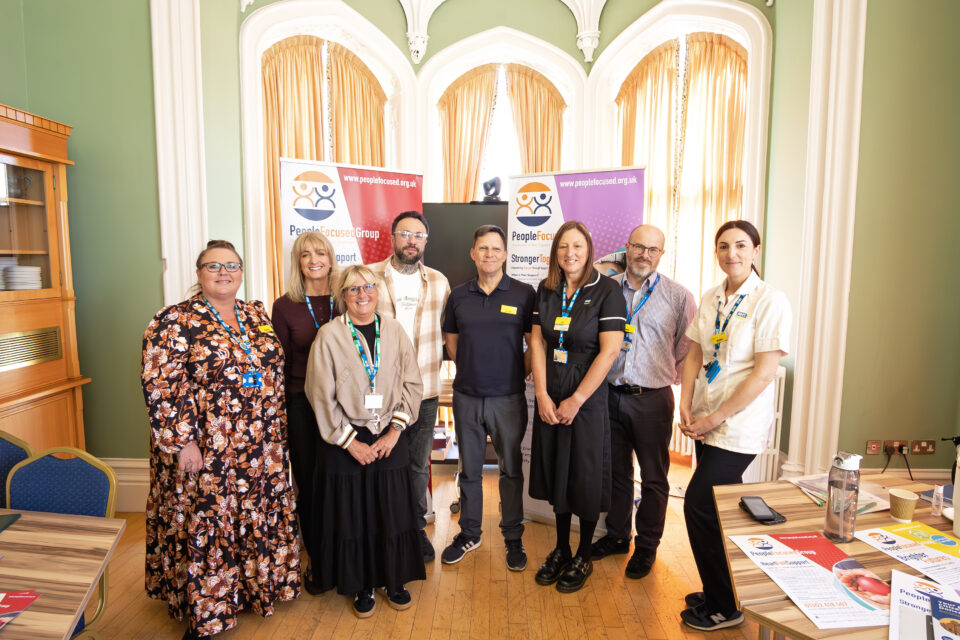
Nathan Lindley, Peer Support Worker

Being a peer support worker means choosing every single day to turn pain into purpose. It means standing in front of people who feel forgotten by the world and saying, without judgement or conditions, “I understand”. Not from a textbook. Not from a distance. But from lived experience, from surviving storms that once felt impossible to escape. A peer support worker carries something rare into the lives of others, real empathy, earned through struggle, heartbreak, healing, and hope. And because of that, their words reach places that clinical language never can.
For me, being a peer means becoming proof that people can rebuild themselves after life has tried to break them. It means sitting with someone in their darkest hour and helping them believe that tomorrow still belongs to them. It means listening when someone feels invisible, staying when others walk away, and reminding people that their story still has chapters left to write. There is no applause for most of these moments. No spotlight.
Just quiet acts of compassion that save lives in ways the world may never fully see. A peer support worker is not someone who has all the answers. They are someone brave enough to walk beside another human being through fear, trauma, addiction, grief, or despair and whisper, “You do not have to carry this alone anymore”.
That kind of work changes people forever. Because sometimes healing does not begin with treatment or advice, sometimes it begins the moment somebody finally feels understood. And that is what truly means to be a peer. To become a light for people who cannot yet see their own. The beautiful truth is that every one of us holds the ability to be a peer in some way. We do not need titles, certificates, or perfect lives to offer kindness, understanding, and presence to another person. Sometimes being a peer simply means listening without judgement, checking in on someone who is struggling, or reminding a hurting soul that they matter. In a world where so many people feel alone, even the smallest act of compassion can become a lifeline. We all carry the power to help another human being feel seen, heard, and hopeful again, and that power can change lives. Make someone realise their lowest point is actually their foundation.
Joanne O’Marr, Macmillan Cancer Information and Support Service Lead
Peer support and physical health services peer support is a very recent addition to the service, helping to support people affected by cancer and promoting cancer awareness and health education within the community, with a more meaningful and targeted approach as we increase our capacity.
As a team we have already identified areas where the peer support role adds significant value and enables us to deliver more responsive, personalised care and support. We are excited about the future potential of this role, as we continue to recruit peer volunteers and integrate and develop the model, guided by the experiences and feedback of our service users.
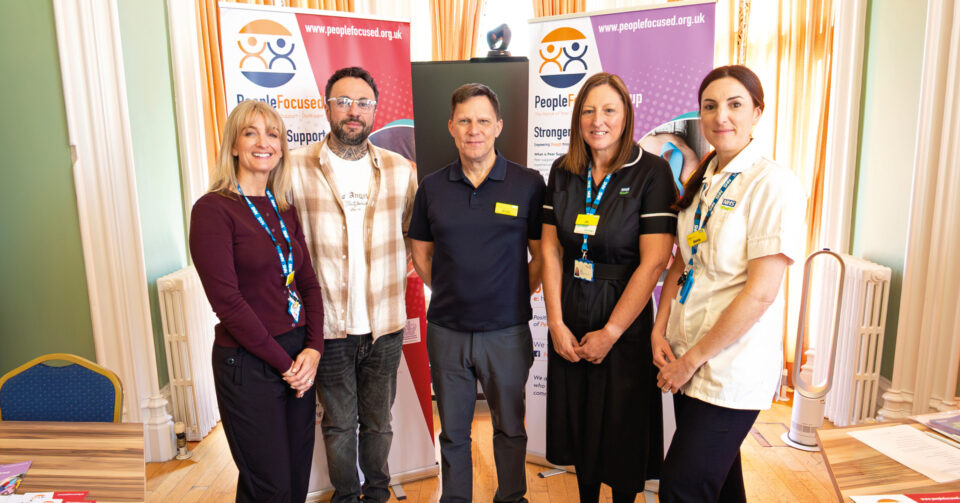
Meet Jeanette, Peer Support Worker, Community Wellbeing team

My name is Jeanette, and I work for People Focused Group as part of trust’s Community Wellbeing team. I have been with People Focused Group for the past 18 months, and I thoroughly enjoy the diversity that my role brings.
No 2 days are ever the same. One day we might be swimming or supporting someone to access the gym, and the next we could be accompanying someone to a GP appointment or helping them overcome the everyday challenges that can often feel overwhelming.
From the very beginning, the team at the trust has fully embraced peer support and has made me feel valued as part of the wider team. It is a fantastic example of what can be achieved when lived experience is recognised as an essential part of someone’s recovery journey.
I genuinely love what I do. Watching someone overcome obstacles, grow in confidence and begin to believe in themselves again is incredibly rewarding. Seeing people blossom and achieve things they once thought impossible is the greatest reward I could ever ask for.
Meet Sian, Peer Support Worker, Community Wellbeing team

Hi, my name is Siân, and I am a Peer Support Worker at People Focused Group, embedded within trust’s Community Wellbeing team, formerly known as the severe mental illness team. I have worked at People Focused Group for 2 years, and I am incredibly grateful to have found a place where people are encouraged to be open, honest and completely themselves. Working here has given me the opportunity to use both my own lived experience and my professional skills to support others on their recovery journeys.
What I value most is that we always see the person before the problem. We focus on people’s strengths, hopes and aspirations rather than simply the challenges they face. Every individual has something unique to offer, and it is a privilege to support people as they rebuild confidence, reconnect with their communities and move towards the life they want.
Being part of People Focused Group means being part of a team that truly believes in the power of connection, compassion and peer support. I have seen first-hand the difference that having someone who genuinely understands, listens without judgement and believes in you, can make. I feel incredibly fortunate to be able to offer that support to others every single day.
Progress and feedback from our communities
Promise 1
Employ peer support workers at the heart of every service that we offer by 2027.
Success measures
Each clinical service in the trust will have a peer support worker aligned to it and working with patients in their care.
Progress made in 2025 and 2026
The trust built strong foundations for expanding peer support. A baseline review identified 37 active peer support workers (PSWs), mostly through the People Focused Group. Targeted recruitment and new support structures enabled rapid growth, leading to full peer support worker coverage across all mental health inpatient wards by March 2026.
Community gaps began to be addressed through shared-resource models. Peer workers contributed to improved outcomes, for example in Rotherham’s primary care mental health hub, their involvement reduced overdue severe mental illness (SMI) health checks from 129 to 40. Peer support workers also became more involved in governance, joining interview panels and ward quality reviews. As we look to open a 24-hour, 7 days a week mental health open access service in Scunthorpe, peer support workers will be the principal, and first, responders in that unit.
A Doncaster peer support hub with 5 full-time staff launched, signalling a scalable model for wider rollout across the trust.
Plans for 2026 and 2027
The focus shifts to scaling and sustaining peer support across all services. Recruitment will expand into community and outpatient areas, supported by new locality-based peer support hubs in North Lincolnshire and Rotherham. A co-produced community peer support charter will set consistent standards across the trust. The peer support worker workforce is expected to grow by at least 50% (around 20 new roles). A centralised peer support worker register and monthly monitoring will improve oversight. An outcomes framework has been developed to measure peer support worker impact, with quarterly reporting to the board and clinical leadership executive. The year will focus on completing recruitment, strengthening training and supervision, and embedding sustainable governance for peer support.
Promise 1 easy read

What we achieved
We have more peer support. There is better support for people using services. Peer support workers playing a bigger role in improving care.
What’s next?
Recruiting new peer support workers. Providing good training and support. Making sure peer support is well organised and can continue in the future.
- Rotherham, Doncaster, and North Lincolnshire have all employed peer support workers.
- Equity is increasing across Rotherham, Doncaster, and North Lincolnshire.
- Rotherham now has a peer support hub model in adult mental health services.
- North Lincolnshire now has a peer support hub model in adult mental health services.
- Doncaster now has a peer support hub model in adult mental health services.
- Doncaster has peer support in cancer and cardiac rehabilitation services.
- Peer Supporters are visiting every adult mental ward in Rotherham, Doncaster, and North Lincolnshire.
- Children’s Services all have peer supporters in 8 Rotherham, Doncaster, and North Lincolnshire.
- Where do we need to see more peer support? Physical health rehabilitation, neurodiversity (all ages) and long term conditions.
Promise 2
Support unpaid carers in our communities and among our staff, developing the resilience of neighbourhoods to improve healthy life expectancy.
Success measures
- Achieve carers federation accreditation for the work that we do across the trust.
- Provide flexible, safe, timely access to all our inpatient areas for carers to spend time with their loved ones.
- Identify most and better support all unpaid carers in our workforce, recognising carers traditionally excluded.
- Identify all-age carers who use our services and ensure their rights under the Carers Act are recognised.
Progress made in 2025 and 2026
The trust made substantial progress in getting ready to better identify and support unpaid carers. A carers support action plan was launched, and all inpatient wards adopted extended visiting hours and consistent carer-friendly practices from September 2025. Carer involvement was built into clinical processes through new electronic record prompts and formal assessments. Internally, the unpaid Staff Carers Network more than doubled in size, and more employees identified themselves as carers on electronic staff record. The trust prepared for the Carers Leave Act (2023) by reviewing human resources (HR) policies. Externally, partnerships strengthened through participation in Doncaster Council’s Carers Strategic Oversight Board and joint events such as Carers Rights Day. Carer referrals for formal support increased significantly, but from a very low base.
Plans for 2026 and 2027
We will work to achieve Carers Federation Accreditation by December 2026. All services will adopt a standardised carer identification question and referral pathway by mid-2026, aiming for every patient to have any informal carer recorded. Accreditation evidence, training records, feedback, and compliance data, will be compiled throughout the year. Further initiatives will strengthen support for staff carers, expand partnership working, and ensure carers’ rights under the Carers Act are consistently upheld.
The big priority is to increase by at least 5 times the number of people referred for carer assessments. In practice this means identifying carers much earlier in the care of our patients. We have spent 2025 building processes to do this. We now need to go big.
Promise 2 easy read

What we achieved
Better support for unpaid carers. Carers are more involved in care and treatment. Stronger partnerships with local organisations. More carers getting the help they need, but even more carers need help.
What’s next?
More carers identified early. More carers getting support. Better support for staff who are carers. Carers getting their rights.
Getting it right for communities
The views of others about promise 2 kindly gathered by People Focused Group.
-
Check understanding
I was given information about carers but I couldn’t read it and didn’t really understand that I could get help.
-
Front door for carers
Where would I go for support? There should be a place where carers can just drop in and get the help they need, I just don’t know where to start looking.
-
Clear across all services
Carers information is too fragmented, it needs to be consistent and not depend on getting a good worker.
-
Easier access
It was hard to get any help but when we got the right support it worked really well.
-
Big theme
Tell people carer support exists.
-
Follow up
I was asked if I was a carer then that was it nothing else happened.
Carers describe a messy system that needs to be clearer and more consistent. Make sure people know what is available.
The carers that have had support describe that this has helped.
Getting it right for colleagues
-
Flexible working
Some weeks I have a lot of appointments with the person I care for and instead of taking leave being able to condense my hours at these times.
-
Multiple caring roles
I have to build time owed for caring appointments its hard when you care for more than one person.
-
Carer network
I feel supported by the Carer Network and my manager. More involvement from senior leaders in the carers network.
-
Full team understanding
I think understanding is better from managers but feel isolated from my team when I need time off for caring.
-
Rapid response
More understanding when sudden issues arise.
-
Information
More awareness of carers rights and what support there is.
Staff need more clarity about what is available and greater flexibility, especially with multiple caring roles.
Staff describe improved management support and Carers’ Network as positive.
Support unpaid carers in our communities and among our staff
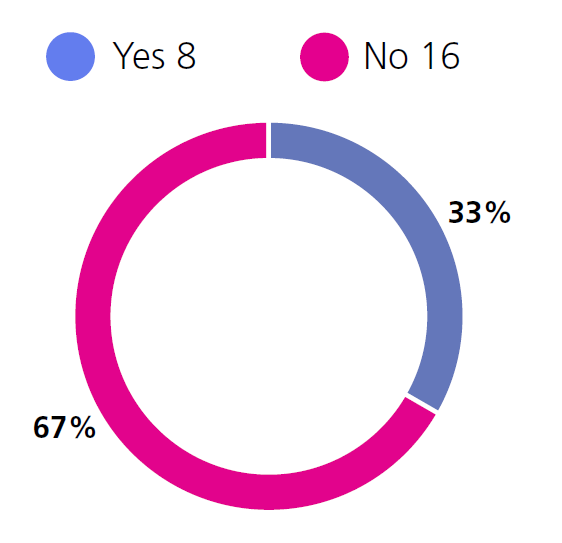
24 people completed a short survey, and we spoke with 12 people to get a better understanding.
Were you asked about identifying as a carer as part of the assessment or discussion?
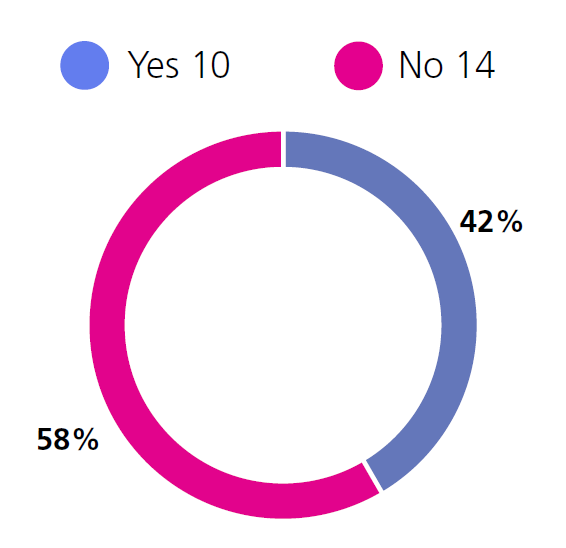
Were you provided with details about any carer support available within your own community?
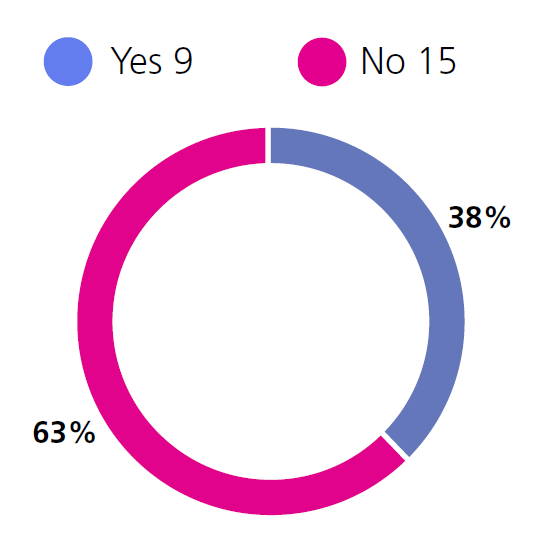
Were you provided with information about any support available for carers?
On a scale of 1 to 5, how would you rate the support provided by the trust to assist you in your role as a carer? (where 1 is not supportive at all and 5 is extremely supportive).
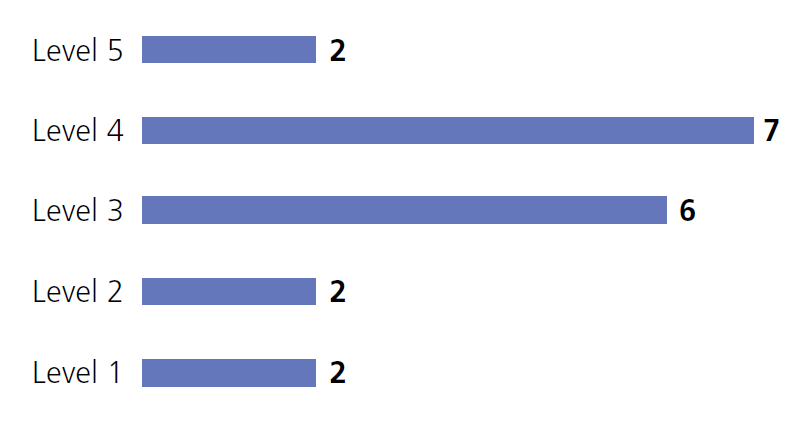
Average rating of 3.26.
On a scale of 1 to 5, how well do you think the trust understands the challenges faced by staff members who are also carers? (where 1 is not well at all and 5 is extremely well).
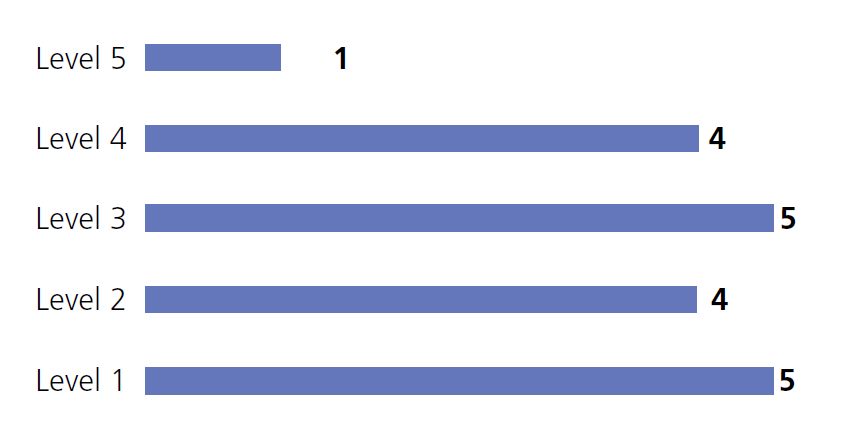
Average rating 2.58.
How often do you feel comfortable discussing your caring responsibilities with your line manager or human resources? (where 1 is never and 5 is always).
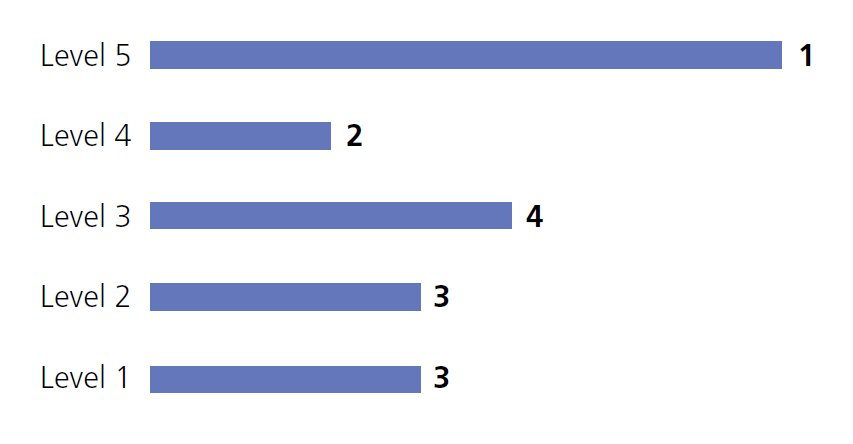
Average rating 3.37.
Meet Heather, Young Carer
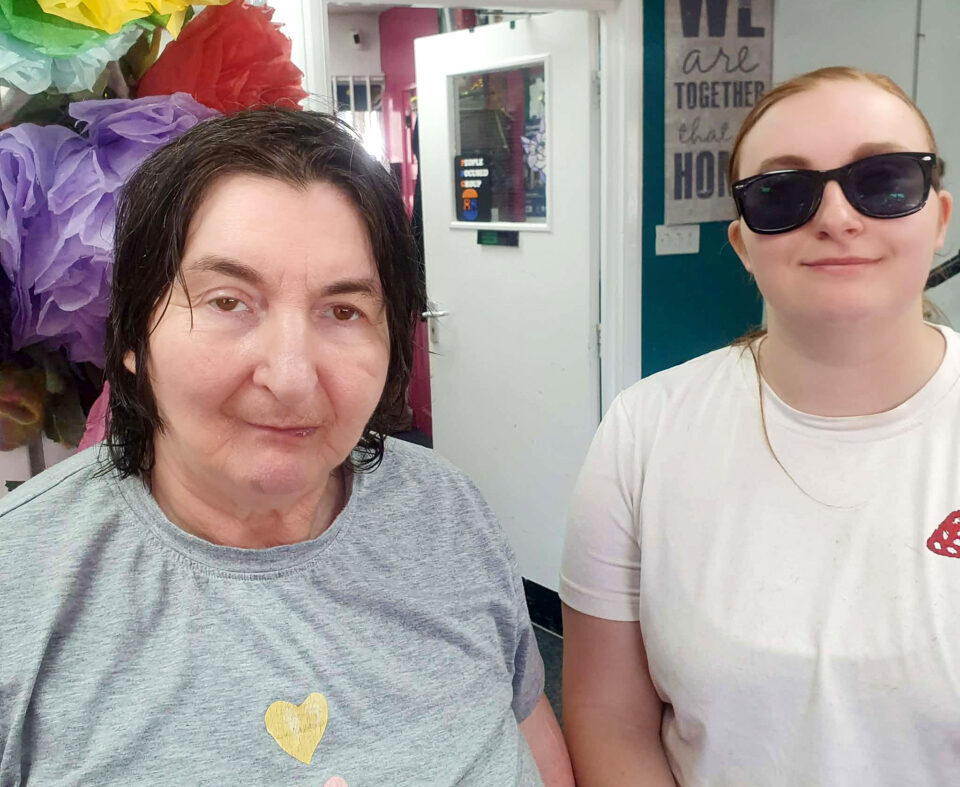
My name is Heather, and I am a carer for my mum, Karen, who has been accessing community and inpatient mental health services for over 30 years.
Growing up as a young carer, it was important for me to understand the support that was available for carers and how I could access it. I first found out about the trust’s carer services through attending the better you young people’s service, as well as through my mum’s involvement with The Wellness Centre. Karen and Heather.
Being a carer can sometimes feel overwhelming, and I know how important it is to have the right support. I would like more help from trust carer services to better understand my mum’s mental health, access the support available to carers, receive an up-to-date carer’s assessment, and have support that recognises my own wellbeing alongside my caring responsibilities.
Caring for someone you love can be challenging, but having the right information, understanding and support can make a real difference, not only for the person receiving care, but for carers too. Every carer deserves to feel listened to, valued and supported throughout their own journey.
Promise 3
Work with over 350 volunteers by 2025 to go the extra mile in the quality of care that we offer.
Success measures
- Have 350 volunteers registered to work with us or have equivalent to that figure volunteering time with us through another body.
- For that body of volunteers to reflect the diversity of our populations.
Progress made in 2025 and 2026
The trust delivered an exceptional year for volunteering, meeting, and surpassing the target of 350 active volunteers by October 2025. This represents a major rise from around 100 volunteers in 2023. By March 2026, the trust had over 360 active volunteers across all 6 service groups, with 5 groups hosting at least 50 volunteers each. The opening of the Elizabeth Quarter building in Scunthorpe will see further expansion in North Lincolnshire.
Diversity improved significantly. Targeted outreach brought in younger volunteers and more people from minority ethnic backgrounds. An internal report confirmed the volunteer cohort is now more diverse than the paid workforce. Volunteers contributed substantial time and impact, some logging over 360 hours in a year, and their presence was repeatedly praised by patients and staff. Our evaluation work found volunteering boosted both volunteer wellbeing and staff morale.
Overall, the trust met every success measure for promise 3. Hitting the numeric target, improving diversity, and embedding volunteers into governance and service delivery.
Plans for 2026 and 2027
The trust aims to maintain momentum by keeping volunteer numbers above 400 throughout the year, recruiting at least 50 new volunteers to offset natural turnover. Diversity efforts will continue, with a focus on young people and underrepresented communities. A new volunteer ambassador scheme will support targeted recruitment.
Training and support will be strengthened through a new volunteer learner zone offering eLearning and workshops. Each service directorate will create at least one new volunteer role or project that directly contributes to service quality, ensuring volunteering remains meaningful and impactful.
Promise 3 easy read
What we achieved
More volunteers are helping us. A wide range of people are becoming volunteers. Better support for patients and staff. Volunteers play an important role in our services and decision-making.
What’s next?
More volunteers helping us. Better training and support for volunteers. More opportunities for volunteers to get involved. Volunteers making a positive difference to services and patients.
The views and experience of promise 3 kindly gathered by People Focused Group:
- volunteer numbers have continued to grow
- the range of opportunities has increased
- young people are supported well
- working across all 3 areas
- regular training opportunities
- volunteers feel valued
Meet Nancy, Volunteer

Volunteering with Rotherham, Doncaster and South Humber NHS Foundation Trust (RDaSH) has been one of the most fulfilling, rewarding and eye-opening experiences of my life. It brings me great joy to give something back to the trust and to the people who use its services because I have ridden the stormy waves of mental health myself, and, like many people, I continue to navigate that journey.
Volunteering has given me a real sense of purpose. It has shown me that I am wanted, valued and needed. There is a place for me where I can not only help others but also continue to grow in my own recovery.
Using my lived experience, I am able to offer genuine support and insight in many different ways. Whether I’m volunteering as a peer on the ward, sitting on interview panels, or attending trust staff inductions to talk about what I do and why peer support matters. I know that my experiences can make a real difference.
Every opportunity gives me an incredible sense of achievement. I feel respected because lived experience is something that cannot be taught in a classroom. There are no degrees or university courses that can replace what comes from walking the journey yourself. Those of us with lived experience hold a unique set of skills, and I am proud to see the trust recognising, valuing and nurturing those skills every single day.
I truly believe exciting things lie ahead as peer support continues to grow and become an even more important part of mental health services.
In short, I care about caring, and I couldn’t imagine doing anything more meaningful.
Promise 4
Put patient feedback at the heart of how care is delivered in the trust, encouraging all staff to shape services around individuals’ diverse needs.
Success measures
- Increase by 15% the scale of feedback received in the trust versus 2024 and 2025 baselines.
- Ensure that feedback is sought and received from a diverse range of backgrounds including those subject to Mental Health Act detention.
- Demonstrate that patient feedback at directorate level has resulted in meaningful change by 2026.
Progress made in 2025 and 2026
The rollout of Care Opinion in late 2024 led to a surge in feedback. By summer 2025 the trust had received over 1,000 stories, rising to more than 1,800 by March 2026, with an 82% response rate. This comfortably exceeded the aim of increasing feedback by 15%.
The trust acted visibly on what people said. Feedback led to extended weekend therapeutic activities, clearer ward welcome packs, and improved communication with families.
Feedback is now a standing item at board and clinical leadership executive meetings, and directorates routinely review stories to inform improvements. To reach underrepresented groups, the trust co-designed a paper-based tool for patients detained under the Mental Health Act, piloted in early 2026.
The impact is encouraging. The 2025 Community Mental Health Survey showed the trust’s best-ever results, complaints about not being listened to fell, and no new Care Quality Commission warning notices were issued in 2025 related to communication. An internal audit in March 2025 gave “significant assurance” that the trust is embedding a strong culture of patient involvement.
Plans for 2026 and 2027
We aim to increase feedback volume by another 15% and broaden the range of voices heard. This includes expanding Care Opinion promotion (for example quick response (QR) codes in clinical areas), strengthening feedback routes for detained patients and people with communication needs, and ensuring every directorate can demonstrate how feedback has shaped service changes.
But this promise is not about quantity it is about meaning and impact. Both the positive and less positive feedback we hear has to affect what we do, what we keep, and what we value. Making that ambition true more widely in the trust is our ambition.
Promise 4 easy read

What we achieved
More people are sharing their views. We are listening and making changes. Patients and families are having a stronger voice. Services are improving because of feedback.
What’s next?
More people sharing their views. Feedback leading to real change. Patients and families being listened to. Better services for everyone.
Meet Kathleen (kindly provided by People Focused Group)
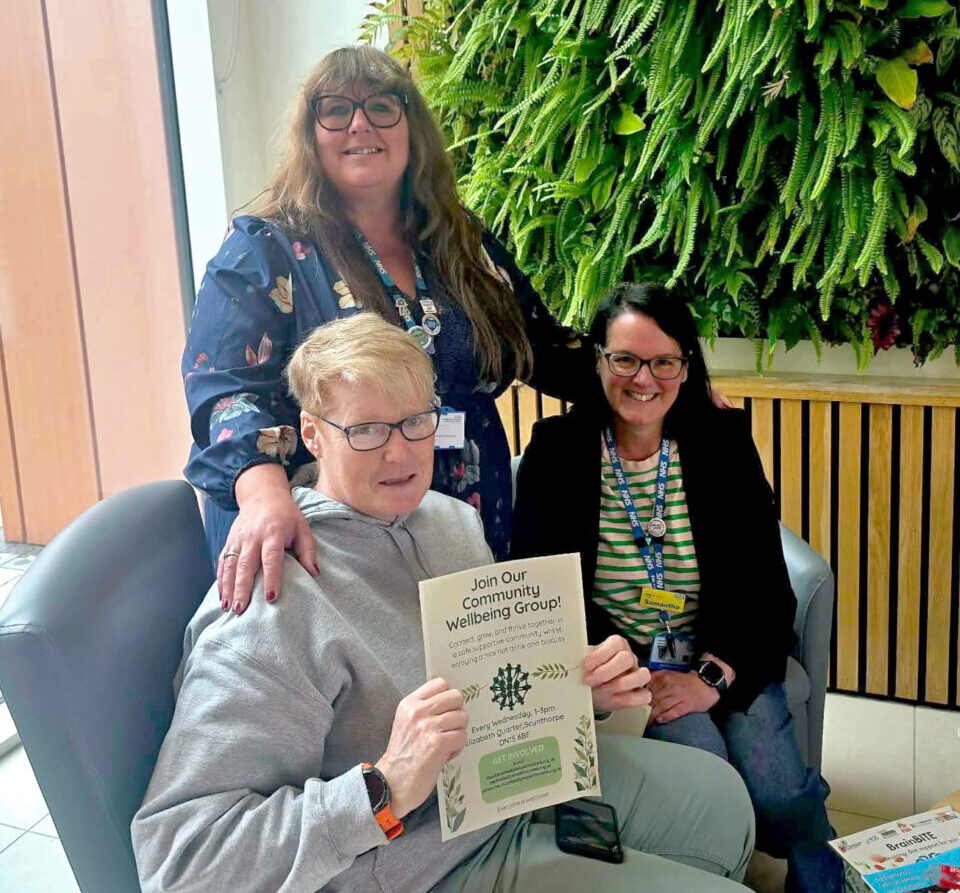
Kathleen, from North Lincolnshire, shared her experience through Care Opinion after feeling deeply disappointed by the decision to end her weekly support group. She spoke openly about how let down she felt and the impact that losing the group would have on her wellbeing.
Her feedback was made publicly through Care Opinion and received a prompt response. Most importantly, her concerns were listened to and acted upon. Working alongside Kathleen and other members of the group, a new solution was found.
Rather than the group coming to an end, it is now facilitated by peer supporters, ensuring there was no break in support for those who rely on it.
Kathleen describes the experience as one where her voice genuinely mattered. She felt listened to, involved in the decision-making process and reassured that her views had influenced a positive outcome.
The experience has inspired Kathleen to give back to others. She is now progressing to become a trust volunteer, supporting other people to share their experiences, have their voices heard and help shape services for the future.
Kathleen’s story demonstrates the power of listening, co-production and acting on feedback. When people are heard and involved, services can evolve in ways that make a real difference, not only for one individual, but for entire communities.
Promise 5
From 2024 systematically, involve our communities at every level of decision-making in our trust throughout the year, extending our membership offer and delivering the annual priorities set by our staff and public governors
Success measures
- Involve patient and community representatives fully in our board, executive and care group governance.
- Deliver the board’s community involvement framework in full.
- Apply patient participation tests to new policies and plans developed within the trust.
- Support active membership participation in the work of the trust, implementing a new membership offer in 2024 and 2025 and evaluating it in 2026 and 2027.
- Deliver the annual priorities set by our council of governors.
Progress made in 2025 and 2026
All of our committees that make decisions include community members, and our elected governors join appointed members of the board in our committees. These voices have begun to change what we talk about and how we talk about it, impacting the choices we make as a trust. That is increasingly too inside our care groups and directorates, aided by the presence in our leadership development education of 10% of places reserved for community leaders. This has built awareness, knowledge and relationships.
The launch of our Communities’ Leadership Executive in May 2026 will bring a closer and more impactful relationship between voluntary sector leaders and our organisation. As advocates, providers, and partners these groups will speak truth to power, and we aim to change how we work because of their contribution. Our policies are now filtered through a patient-led process. With all those policies being re-formatted by October 2026, we believe that that process will grow in influence.
The trust also strengthened our membership. Targeted outreach increased public membership from around 400 to 600 by October 2025, with improved demographic completeness (unknown ethnicity reduced from 57% to 41%). Members played an active role in decision-making, including voting on annual quality priorities, nearly 1,000 votes were cast in 2025.
Plans for 2026 and 2027
Our community involvement framework is not just about bringing community voices into the trust, but about the trust being present in spaces and places in our community. That is mixed at present. Working place by place, with our care groups working together as one, we will see that change in the year ahead.
The board has begun to consider its own privilege and explore how we can hear better seldom heard voices within our communities, including all of the inclusion health groups covered by promise 10.
Promise 5 easy read

What we achieved
More local people helping to shape services. Stronger relationships with community groups. Patients having a bigger voice. More people involved in decisions we make. Policies that are easier to understand and use.
What’s next?
Stronger links between communities and us. More opportunities for people to have their say. Better understanding of different community needs. Services shaped by a wider range of voices.
What our communities told us about how we did (kindly provided by People Focused Group):
- 5 seats for each area
- shared power
- transparent
- service reviews
- included
- interview panels
- policy reviews
- inductions
- ward audits
Last year we said more of the community need to be involved. This year Rotherham, Doncaster and North Lincolnshire are all involved.
Promise 6
Poverty proof all our services by 2025 to tackle discrimination, including through digital exclusion.
Success measures
- All our services to have completed poverty proofing and be able to evidence resultant change (including digital).
- Sustained reduction in service attendance gap (7%) in lower decile neighbourhoods.
- Benefits and debt advice access to be routine within trust services to tackle “claims gap”.
Progress made in 2025 and 2026
We made substantial progress in poverty proofing our services. Working with a national expert organisation, 110 services completed a poverty proofing review, with all others scheduled to be completed by September 2026.
A baseline target was set to reduce “did not attend or was not brought” rates by 7% in the most deprived areas. This has not been achieved at all, but we are hopeful that the use of text reminders and free travel access from June 2026 may begin to change that.
The trust also strengthened its partnership with Citizens Advice across Rotherham, Doncaster, and North Lincolnshire, enabling over £1,000,000 in income gains or debt relief for patients during 2025 and 2026. We are investing to expand this further, as we know that there is much overlooked and unclaimed entitlement. Disability is closely associated with poverty, and we can do much more to help local people to tackle that.
Plans for 2026 and 2027
Next year’s focus is on removing practical and financial barriers to care. The trust will offer travel support, including home or community appointments, volunteer-driver transport, and free bus passes. More flexible appointment options (home visits, video, telephone) will be expanded, supported by the rollout of SystmConnect, so patients can request suitable times. We will also provide digital equipment to those who need it.
Financial wellbeing will become a routine part of appointments, recorded on SystmOne and embedded via Dialog plus in mental health services. The trust will also improve access to food support, including easier.
Promise 6 easy read

What we achieved
We are helping more people’s financial challenges. More people are getting help with money or debt problems. We are making it easier for people to get appointments. More support is available for those who need it most.
What’s next?
More support for travel costs. Easier access to appointments. Help with money worries and debt. More choices about how and where people receive care. Better access to food support and computers.
What people told us about how we did on promise 6 (kindly provided by People Focused Group):
“Money shouldn’t be a barrier to use services.”
“The trust now has a system in place to help people to get to their appointments. This means people can access a daily bus pass before their appointment, previous systems of claiming bus fares back did not work for people that needed help the most.”
We asked what difference this has made:
“I live in Askern and had to give up work because of my health, money is really tight. Being able to have a bus pass for appointments is literally the difference between me being able to get the help I need or not.”
“Such a small act of support removes such a big barrier.”
“Making a big impact.”
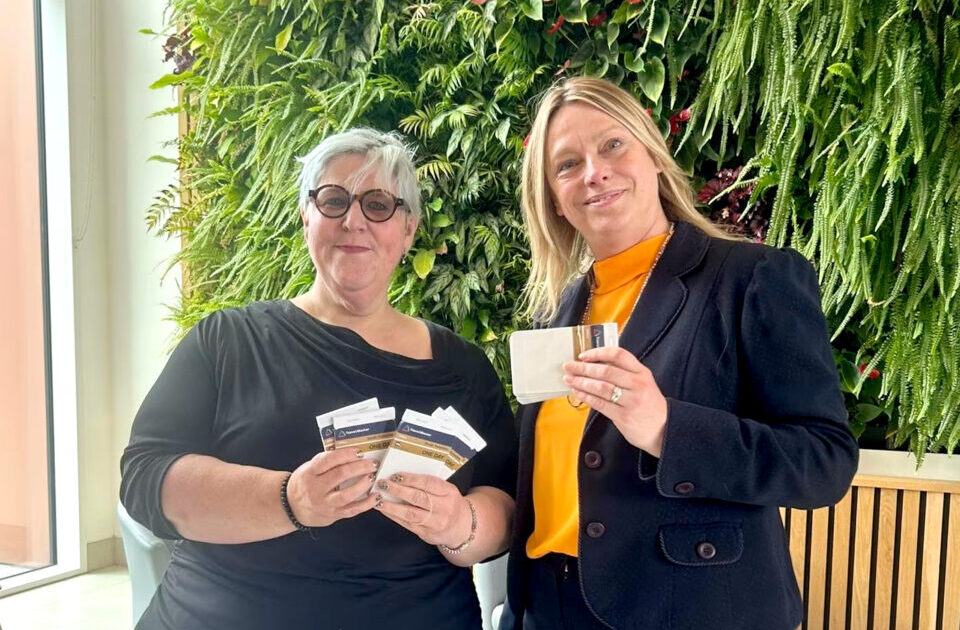
A dignity room for Doncaster
The trust has supported the creation of a dignity room in Doncaster.
The dignity room gives people in hospital free access to everyday essentials if they need them.
Items include:
- clothes
- underwear ️
- nightwear and pyjamas
- socks
- slippers
- toiletries
No one should have to worry about not having the basic things they need while they are in hospital.
The dignity room helps people feel comfortable, respected and cared for.
If the Doncaster dignity room is successful, the plan is to open dignity rooms in Rotherham and North Lincolnshire, so even more people can benefit.
Promise 7
Deliver all 10 health improvements made in the Core20PLUS5 programme to address healthcare inequalities among children and adults: achieving 95% coverage of health checks for citizens with serious mental illness and those with learning disabilities from 2024
Success measures
- Achieve measured goals for chronic obstructive pulmonary disease (COPD), hypertension, asthma, diabetes, epilepsy, oral health, and children and young people mental health by 2026 and 2027.
- Achieve learning disability and serious mental illness health check measure in 2024 and 2025 and recurrently.
Progress made in 2025 and 2026
Performance remained strong across key areas of the Core20PLUS5 programme. All children and young people with an intellectual disability or autism referred to the specialist epilepsy nurse were seen within the 4-week standard, improving on already high performance. Was not brought rates for children from deprived areas fell further, narrowing the inequality gap.
Although referrals for children from black backgrounds increased in number, their overall proportion remained at around 2%. A major focus was sustaining the significant rise in annual health checks for people with severe mental illness (SMI) or learning disabilities. By March 2026, over 80% of people supported by the trust had received their annual health check, exceeding national expectations but well short of our 95% aim.
Plans for 2026 and 2027
The trust will strengthen culturally responsive approaches to improve early access and experience for black children and young people in mental health services. It will maintain the 4-week standard for epilepsy nurse referrals and continue reducing “was not brought” rates.
The trust will begin monitoring cancer awareness events and follow-up referrals from blood pressure checks. Services will continue ensuring high coverage of annual health checks for people with severe mental illnesses or learning disabilities, building on the peer support already in place.
Promise 7 easy read

What we achieved
Faster access to specialist support for children with epilepsy. Fewer children and young people missed appointments. More people receiving important health checks. Progress in reducing health inequalities
What’s next?
More mental health support for black children and young people. More people receiving important health checks. Continue faster access to specialist support for children with epilepsy.
Promise 8
Research, create and deliver five impactful changes to inequalities faced by our population in accessing and benefitting from our autism, learning disability and mental health services as part of our wider drive to tackle inequality (the RDaSH 5).
Success measures
- Increase access to health checks for minority ethnic citizens with learning disabilities.
- Increase diagnostic rates for dementia among minority ethnic citizens.
- Improve access rates to talking therapies among older adults.
Progress made in 2025 and 2026
Talking Therapies
Access for older adults increased, supported by the rollout of the long-term conditions service across all 3 places, outreach to older adult groups and care homes, and awareness work on our intermediate care wards, Hazel and Hawthorne. Text messaging to people using physical health services and closer work with GPs also helped boost referrals.
Perinatal mental health
Perinatal care was added to promise 8 in 2025 and 2026. 21 people from black backgrounds were referred, more than the whole of 2024 and 2025, helped by investment in peer support. However, the trust recognises this is early progress and that wider system changes are needed.
Dementia
Referrals from global majority communities did not increase. To address this, the trust invested in partnerships with voluntary and community organisations already working with these communities and developed place-based plans across Rotherham, Doncaster, and North Lincolnshire.
Learning disability
Initial research suggests some global majority groups may be under-represented on learning disability registers. Health check uptake for people with a learning disability from global majority backgrounds remains lower than expected. Closing this gap is a priority for 2026 and 2027.
Autism friendly
We have made our environments more autism and neurodivergent friendly, with a focus upon our workforce. Healthcare support workers on our wards had training on knowledge and awareness of neurodiversity. We have rolled out Oliver McGowan training across the trust as well. We have worked with people with lived experience and our psychological professionals to adapt psychological intervention. As well as this, we have invested in bringing our waiting lists down for both adults, children and young people, who have been waiting a diagnosis of autism or attention deficit hyperactivity disorder (ADHD).
What we achieved
A lot of groundwork took place in 2025. With the exception of our commitment to autism suitable ward environments, we remain a long way from delivering the “RDaSH 5”.
For older adults in talking therapies, changing who accesses perinatal mental health, and addressing gaps in dementia diagnosis, we will push harder to succeed with our existing projects. For our work on annual health checks for global majority citizens with learning disabilities, we will use research and feedback to launch a new approach by November 2026.
Promise 8 easy read

What’s next?
Better access to services for different communities. More people receiving important health checks. Continued improvement for neurodiverse people.
Promise 9
Consistently exceed our apprentice levy requirements from 2025, and implement from 2024 specific tailored programmes of employment access focused on refugees, citizens with learning disabilities, care leavers and those from other excluded communities.
Success measures
- Achieve the levy requirements in 2024 and 2025 and thereafter.
- In 2024 and 2025 introduce tailored access scheme for veterans and for care leavers.
- In 2025 and 2026 introduce tailored access scheme for refugees and homeless citizens.
- In 2026 and 2027 introduce tailored access scheme for people with learning disabilities.
Progress made in 2025 and 2026
We exceeded our apprenticeship levy allocation for the first time, achieving 102% spend in 2025 and 2026. With courses already committed, the trust is confident it will meet the requirement again in 2026 and 2027.
Foundations and networks for all tailored access schemes, veterans, care leavers, refugees, homeless citizens, and people with learning disabilities, were established. However, the schemes themselves have not yet launched, which the trust acknowledges as a disappointment.
Plans for 2026 and 2027
National changes to apprenticeship levy rules mean some courses are no longer eligible, so RDaSH will review its approach and increase use of short courses to maintain levy spend from 2027 and 2028 onwards.
With the groundwork now in place, 2026 and 2027 will focus on launching all tailored access schemes, ensuring meaningful employment pathways for refugees, homeless citizens, care leavers, veterans, and people with learning disabilities.
Promise 9 easy read

What we achieved
More investment in apprenticeship and training. Better plans to support people into work. More work needed for new schemes and make them available for different people.
What’s next?
New employment programmes starting. More support for people facing barriers to work. Better opportunities for local people to learn, work, succeed.
Promise 10
Be recognised by 2027 as an outstanding provider of inclusion health care, implementing National Institute for Health and Care Excellence (NICE) and NHS England (NHSE) guidance in full, in support of local Gypsy, Roma and Travellers (GRT), sex workers, prisoners, people experiencing homelessness and misusing substances, and forced migrants.
Success measures
- Meet standards set out in published guidance issued by National Institute for Health and Care Excellence (NICE) and NHS England (2023).
- Internal audit confirms access rates being met and feedback from specific communities corroborates that insight.
- Specific service offers in place for all or most inclusion health groups by 2027.
Progress made in 2025 and 2026
During 2025 and 2026, work on homelessness and inclusion health focused primarily on Doncaster as the pilot site. The team completed the National Institute for Health and Care Excellence guidance 214 (NG214) baseline assessment for integrated health and social care for people experiencing homelessness, identified gaps and produced an action plan aligned with the national NHS Inclusion Health framework. Pathways also completed a Homeless Health Needs Assessment for Doncaster. Partnerships began to strengthen with local community organisations supporting people experiencing homelessness and those involved in sex work, helping to identify barriers, develop a self-assessment audit and review service accessibility.
A new Mental Health Homeless team was established in Doncaster, including a specialist practitioner role for people involved in sex work, and the trust and pathways jointly submitted a bid to the Throne Trust to develop a similar team in North Lincolnshire.
Progress made in 2025 and 2026
Looking ahead to 2026 and 2027, Rotherham and North Lincolnshire will complete their National Institute for Health and Care Excellence guidance 214 (NG214) baseline assessments, identify gaps and develop aligned action plans. The partnership model piloted in Doncaster may be expanded across both places, with engagement beginning with community organisations supporting inclusion health groups. Work will continue to assess services through self-audit, and data collection will begin to support the evaluation of the Doncaster Mental Health Homeless team.
People from inclusion health groups with lived experience will help us to audit access to our services trust wide in 2026. This real time feedback must lead to change in how our policies and practices can prevent service access.
Promise 10 easy read

What we achieved
More support starting for homeless people. More understanding of challenges people face. Plans to expand support to other areas.
What’s next?
Better understanding of what different communities need. People with lived experience helping to improve services. More support for people facing challenges.
Meet Alex
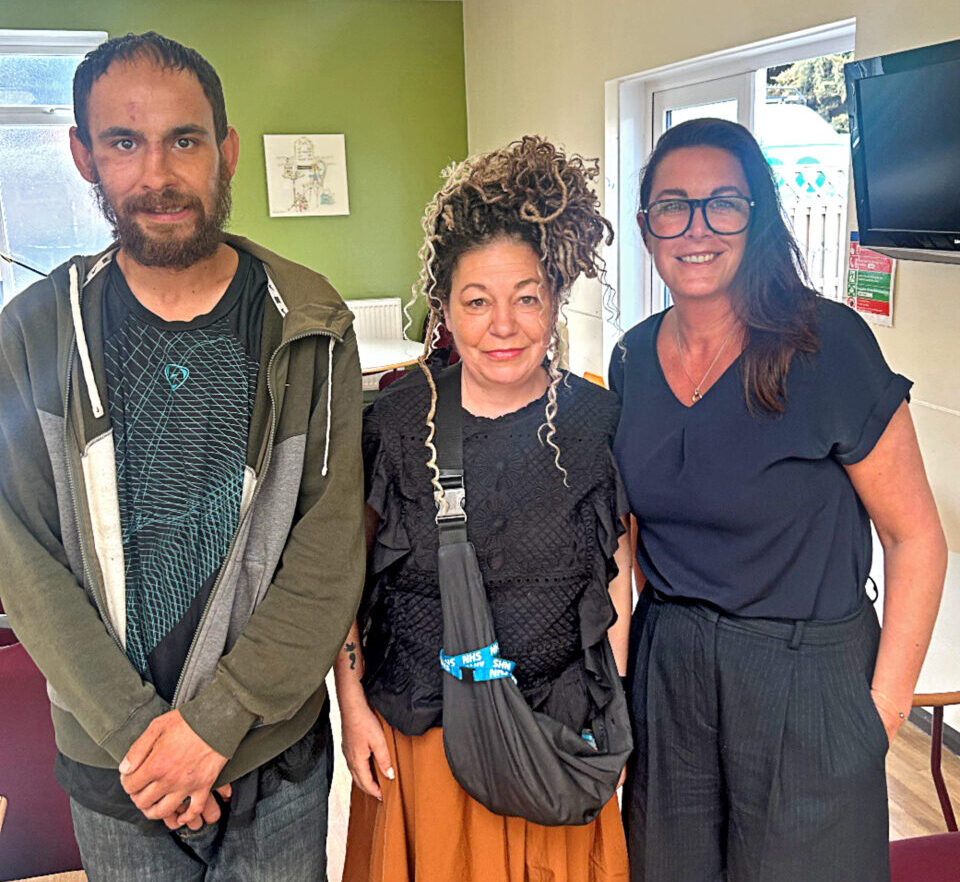
Alex is someone who sleeps rough. He gave his support to test out promise 10 and check how services responded to people experiencing homelessness. He mystery shopped, he completed questionnaires with other people who sleep rough and we held a quiz session.
Mental health services have much more to do. Drug and alcohol services were spot on. Reception staff and call handlers need more training.
Alex has pledged to support the trust to make sure services improve for people who sleep rough.
Promise 11
Deliver in full the NHS commitment to veterans and those within our service communities, recognising the specific needs many have, especially for access to suitable mental health and trauma response services
Success measures
- Achieve priority access to services for veterans (closing gap between prevalent population and identified attendees).
- Introduce peer-led service support offer for local residents.
Progress made in 2025 and 2026
Awareness and engagement increased across the trust, supported by the Ask the Question campaign, extensive Veterans Covenant Healthcare Alliance training and workshops delivered by the Strategic Development team. Identification of Armed Forces Community members continued to rise, with 14,951 referrals recorded in 2025 and 2026.
The first trust Armed Forces Day brought together colleagues, NHS providers, local authorities and charities, strengthening local commitment and generating 8 organisational actions to improve trauma-informed, expedited care. Clinical policies were updated to reflect covenant commitments, and the trust achieved gold status in the Defence Employer Recognition Scheme after holding silver for 5 years.
Plans for 2026 and 2027
In 2026 and 2027, the priority is to recruit peer support roles to provide lived-experience support for veterans, reservists and dependants, helping to improve engagement and support transitions into civilian life. Work to update clinical systems to ensure Armed Forces status is clearly recorded will continue, with completion expected by August 2026. Training, guidance and lived-experience engagement will remain central to ensuring colleagues understand the importance of identifying Armed Forces status and responding appropriately. The voices of veterans and their families will continue to shape all activity under Promise 11 as momentum builds across the trust.
Promise 11 easy read

What we achieved
Better support for the Armed Forces Community members. More staff understanding veterans’ needs. National recognition for the work we do for Armed Forces Community members.
What’s next?
More support from people with Armed Forces lived experience for Armed Forces Community members. Improved recording of Armed Forces status. Better response by us to support Armed Forces Community members.
Promise 12
Work with community organisations and primary care teams to better recognise and respond to the specific needs of the rural communities and villages that we serve.
Progress made in 2025 and 2026
Success measures
- Use rural health and care proofing toolkit (National Centre for Rural Health) to identify needs and potential solutions to improving access.
- Increase digital and outreach service solutions to village communities, starting in North Lincolnshire.
Progress made in 2025 and 2026
We have made minimal progress on this promise this year. We undertook 3 pilot rural proofing audits using the National Centre for Rural Health and Care’s Rural Proofing for Health Toolkit. In particular in Winterton in North Lincolnshire, Dinnington in Rotherham, and Moss and Fenwick in Doncaster. This involved primary care, councils, voluntary sector and Healthwatch. On completion, follow-up meetings were held with participants with actions agreed to more effectively support rural communities such as identifying what community facilities are available in Winterton that mental health services could be provided from. We are yet to start more digital and outreach work in rural areas.
Plans for 2026 and 2027
There will be an initial focus upon Winterton, based upon the rural toolkit. The actions agreed to take forward are, to identify community facilities available in Winterton that mental health services could be provided from, establish how people in Winterton get information about mental health services from, recruit more additional volunteer drivers, work with GP practices to increase attendance and reduce stigma for attending, link with Lincolnshire Rural Services Network, and work with GP Practice to see non-practice Talking Therapy clients (to make a local offer more visible and viable).
Promise 12 easy read

What we achieved
We have started to understand better the needs of rural communities. More work is needed to bring services closer to people who live in rural communities. Local organisations are starting to work together.
What’s next?
We will do more work in Winterton. There will be better information about mental health support available. There will be help with travelling to appointments. More services will be available closer to where people live.
Promise 13
Substantially increase our home first ethos, which seeks to integrate physical and mental health provision to support residents to live well in their household, children’s home, or care home, including older adults.
Success measures
- Deliver over 130 care packages through our physical health virtual ward service.
- Sustain and expand our intravenous (IV) provision in out-of-hospital settings.
- Sustain and expand our Clozapine service in off ward settings.
- Take annual opportunities to transfer services to home care where safe to do so.
Progress made in 2025 and 2026
We have seen a decisive shift during 2025.
The intravenous service in Doncaster’s adult physical health team has expanded significantly, and community Clozapine projects are in place now in all 3 places. The work to do this has been extensive and complex, and rich in learning.
Our virtual ward service continues to expand, and to see more complex and acutely unwell patients. Work to analyse how that can scale up further has taken place.
We have invested over £250,000 in older adult community services intended to tackle avoidable admissions.
Plans for 2026 and 2027
All the work done in 2025 has to be sustained and nurtured. We will get into a rhythm of proactively identifying service opportunities for transfer.
This will be enabled by our work to make sure that agile and remote working among our staff is well supported, with our mobile first approach extended and expanded. If home based care is much or most of what we do, we need to change how we support colleagues to deliver care in that way.
Promise 13 easy read

What we achieved
There was a big change in 2025. More care in the community. Better support for people taking Clozapine. Extra support for older adults. More people receiving care at home through virtual wards.
What’s next?
Build on progress in 2025. More care will be provided closer to home. Improve how we support staff working in the community. Improved technology and mobile working. Helping more people receive care where it suits them best.
Promise 14
Assess people referred urgently inside 48 hours from 2025 (or under four where required) and deliver a 4-week maximum wait for all referrals from April 2026 maximising the use of technology and digital innovation to support our transformation.
Success measures
- Meet 4-hour wait standard in 2025 and 2026, where it applies.
- Meet 48-hour wait standard in 2025 and 2026 for all urgent referrals.
- Make progress to reduce waiting lists and times and close supply gap in 2024 and 2026.
- Meet 4-week standard from April 2026 across all services. Progress made in 2025 and 2026.
Progress made in 2025 and 2026
In 2025 and 2026, significant progress was made against promise 14. Performance against the 4-week standard continued to improve, reaching 88% by year-end. Remaining shortfalls were largely due to isolated, low-volume breaches linked to cancellations or the timing of bookings. Oversight has been strengthened through weekly reviews at both care group and trust level. A new 1-week standard for issuing appointments has also been introduced, with almost all services now compliant.
92% of services now have effective processes in place to respond to urgent referrals within 48 hours. A recent secret-shopper exercise provided additional assurance and highlighted only minor improvements required. The remaining 8% relates to children’s services, where a telephony change has affected responsiveness; this is currently under review.
Plans for 2026 and 2027
Looking ahead to 2026 and 2027, the focus will be on sustaining performance against both the 4-week and 1 week standards through continued governance and oversight. Podiatry will recruit to approved posts to increase capacity, while adult attention deficit hyperactivity disorder (ADHD) and children’s neurodevelopment services will continue to deliver against agreed trajectories, including meeting the national requirement that no child waits over 104 weeks for a neurodiversity assessment by quarter 2.
Governance arrangements will remain in place to monitor compliance and support improvement across all care groups, with the ambition of achieving full compliance by October 2026. Work will continue to embed a culture that recognises the urgency of responding to referrals 7 days a week, supported by wider clinical engagement. Engagement with referrers will also continue to strengthen the identification and escalation of urgent referrals at the point of triage.
Promise 14 easy read

What we achieved
More people are being seen within 4 weeks. Better responses to urgent referrals. Faster appointment information. Regular checks to improve performance. Continued work to improve children’s service response time.
What’s next?
Keep waiting times short. More investment in services where waits are still too long. Make sure all people have short waits.
Promise 15
Support the delivery of effective integrated neighbourhood teams within each of our places in 2024 as part of our wider effort to deliver parity of esteem between physical and mental health needs
Success measures
- Support development of integrated neighbourhood teams (INTs) in 2024 and 2025 in all 3 places.
- Restructure trust services into those integrated neighbourhood teams during 2025 and 2026.
- Evaluate and incrementally improve joint working achieved through these teams.
- Meet 5 measures of community mental health transformation agreed in 2024 at the conclusion of the community transformation national programme.
Progress made in 2025 and 2026
As last year, these plans have been shaped and paused by national policy in relation to neighbourhoods. As such we know that we are some way behind the success measures we set.
However, for adult physical health in Doncaster we have an agreed plan that reshapes all our services into 4 neighbourhood teams. This moves us decisively to a more ‘generalist’ model. Implementation begins in autumn 2026.
We have worked with other partners to try to agree the framework for neighbourhood health in a way that is shaped by circumstance. Alongside the Pride in Place programme that shaping is almost concluded. The time taken to do this will hopefully ensure that this is a multi-agency piece of work, rather than the trust acting alone.
We have undertaken work to better understand declined mental health referrals in Doncaster South Primary Care Network and the learning from that work will be used to help alter how we practice trust wide. In Doncaster East we are working with GP leaders to consider what a more rurally suitable service model looks like.
Plans for 2026 and 2027
In June 2026, we brought patients, community leaders, and others together to start to build our community development work. Reimagining how the trust’s teams and resources might work better embedded into communities and real neighbourhoods.
From this point we expect to spend a year adapting and developing our service models to become more bespoke and shaped to the needs of our communities. Neighbourhood teams are anticipatory in their nature and rely on continuity of care. Both are changes to how we sometimes work, and we know that they will take development, training and the alteration of our practices to be successful.
Promise 15 easy read

What we achieved
We didn’t achieve as much as we wanted to. We have been working with others so that services are closer to where people live. We have worked with local doctors to make sure people get mental health support quicker.
What’s next?
We will work with others to make sure services meet the needs of local people. This also means helping people to avoid them becoming unwell or getting worse. There will be changes to the way we work and other services work.
Promise 16
Focus on collating, assessing, and comparing the outcomes that our services deliver, which matter to local people, and investing in improving those outcomes year on year
Success measures
- Implement Dialog plus by 2026, collating individual outcomes from that work.
- Report and improve patient recorded outcome measures (PROMS) supported nationally.
- Ensure each trust service is reporting one local or national outcome measure by 2025 and 2026 as part of our quality plan
Progress made in 2025 and 2026
During 2025 and 2026, the trust introduced a new approach for understanding patient experience through patient recorded outcome measures. These tools help us understand how people feel about their care and how their wellbeing changes over time. At the same time, we moved away from fixed care-plan templates and adopted Dialog plus, a more personalised and collaborative way for staff and patients to plan care together.
The trust agreed to use 3 core patient recorded outcome measures (PROMs), Dialog, ReQoL-10 and goal based outcomes, alongside the Dialog plus care plan, all of which are used nationally. Training was delivered across all clinical services, and by April 2026, 90% of clinical staff, totalling 1,768 people, had completed the programme. All services are expected to use at least one patient recorded outcome measure, and most are now moving towards using Dialog plus for care planning. A small number of services have agreed exemptions from patient recorded outcome measures, but they still ensure personalised care through the use of Dialog plus.
We continue to collect information on how well patient recorded outcome measures and Dialog plus are being used across teams. Uptake is steadily increasing, and services regularly review their own data, which is also shared with senior leaders to provide oversight and assurance.
Plans for 2026 and 2027
Looking ahead, patient recorded outcome measure training will continue, now supported by the Learning and Development team so that all new staff receive training and remaining staff can complete it. The training offer will be updated whenever new national guidance is released. Regular audits will begin to assess how effectively patient recorded outcome measures and Dialog plus are being used, helping teams understand what is working well and where further support is needed. We will also continue to strengthen how we use outcome data, including tracking changes in individual scores over time. These paired measures will help us understand whether treatments are effective and provide valuable insights into the needs of different groups and communities.
Promise 16 easy read

What we achieved
Care plans are more focused on what matters to people. Patients have a bigger say in care. Patients and staff work together to make decisions. We can better understand if care is helping people.
What’s next?
More staff trained to support personalised care. Better understanding of what works for patients. Better support for different communities and people. Services that are learning and keep improving.
Promise 17
Embed our child and psychological health teams alongside schools, early years and nursery providers to help tackle poor educational and school readiness and structural inequalities
Success measures
- Narrow the school readiness gap between our most deprived communities and average in each place in which we work.
- Seek to see 80% of children meet their own potential for school readiness by 2028.
Progress made in 2025 and 2026
In 2025 and 2026, delivery became fully established in both Doncaster and North Lincolnshire. Building on last year’s parent feedback, Ready for Reception events were delivered across both places, alongside Healthy Child Programme work focused on toileting, oral health, emotional regulation and communication. Engagement has been targeted towards communities experiencing the highest levels of deprivation, with particular attention to Roma and Gypsy Traveller families. In response to what these communities told us, the approach has shifted towards relationship-led, psychologically informed engagement, working closely with trusted community contacts and outreach teams.
Place-based work has centred on neighbourhoods with the greatest inequalities and lowest school-readiness outcomes. Strong partnerships have developed across early years, family hubs and local authorities, supported by psychological professionals embedded within the system. The most recent available data, which runs only to 2024, shows a decline in school-readiness outcomes, meaning it is too early to see the impact of the new model.
Plans for 2026 and 2027
The next phase will prioritise consolidating delivery, securing sustainable capacity, and deepening system learning to ensure that early identification consistently translates into improved outcomes for children and families.
Promise 17 easy read
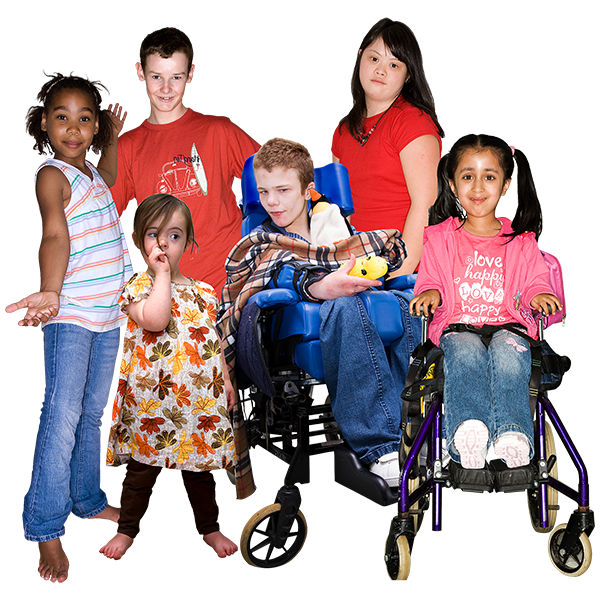 Make sure pre school and school workers are working together.
What we achieved
More support for children before they start school. Stronger relationships with families and communities. Extra help in areas facing the biggest challenges. Better partnership working. More time needed to see the full results of the work.
What’s next?
More support for children before they start school. See if it is making a difference.
Promise 18
From 2023, invest, support, and research the best models of therapeutic multi-disciplinary inpatient care, increasingly involving those with lived experience and expert carers in supporting our patients’ recovery.
Success measures
- Meet guidance obligations from NHS England relevant to the quality of inpatient care, including safer staffing measures where they exist, and fully comply with the Mental Health Act.
- Implement programme of multi-professional quality improvement across all inpatient services by April 2026 and routinely publish data on the care provided in each environment.
- Work with patients and peers to assess the quality of services, including through peer reviews, and ensure that teams can act on that feedback and those evaluations.
Progress made in 2025 and 2026
Over the past year, the trust has made clear progress in strengthening how patient and peer feedback shapes the quality of inpatient care. A stronger emphasis has been placed on listening to what matters most to patients and carers, supported by the culture of care programme and the internal high-quality therapeutic care taskforce. This reflects a deliberate shift towards co-production, transparency and responsiveness in everyday practice.
Standardised visiting hours have been introduced across all inpatient wards, providing greater clarity and fairness while still allowing personalised arrangements where needed. Peer involvement has also grown significantly, with peer support workers now present on every mental health ward. These roles, developed with local peer support organisations, have expanded opportunities for patients to share feedback, engage in therapeutic activity and benefit from lived-experience support.
Therapeutic activity has been strengthened through an expanded 7-day timetable delivered by ward teams and wider trust colleagues, including healthy hospital teams. Workforce capability has also improved, with increased therapeutic staffing levels and targeted training for healthcare assistants on neurodevelopmental conditions, ensuring better support for neurodiverse patients. The introduction of Dialog plus has further embedded personalised, co-produced care planning and structured outcome measures, ensuring patient feedback directly informs ongoing service improvement.
Plans for 2026 and 2027
During the next year we will focus on diagnostic led length of stay to support patients, carers and staff to better navigate inpatient stays, strengthen the ability to use paired outcomes in treatment decisions and personalised care planning and work on the improving picture in terms of mental health act reviews and training.
Promise 18 easy read
What we achieved
We now have standard hours for people to visit patients. There are more activities and support every day. More peer support is available on all our wards. Care plans focus on what matters to people. Better support for neurodiverse people. Services are listening to patient feedback.
What’s next?
Patients and carers will know what to expect during hospital stays. Care plans are more personal and focused on a person’s needs. Improved Mental Health Act training and support. Better understanding if treatment is helping. Patients and staff making decisions together. Better care and experiences for patients and families.
Promise 19
End out-of-area placements in 2024, as part of supporting people to be cared for as close to home as is safely possible
Success measures
Cease to place patients out of their home district except where that is their choice or in their best interests.
Progress made in 2025 and 2026
We have made significant progress with this promise. With the introduction of a range of clinical and improved management processes to appropriately manage the flow of patients in and out of inpatient wards we have reduced the number of patients who are inappropriately placed out of area from 25 in April 2024 to 0 in May 2026. This means that patients are being cared for closer to home so their families and loved ones can visit them during their stay on our wards, and they continue to be connected to local services and communities on discharge.
Plans for 2026 and 2027
We aim to sustain having no patients inappropriately placed out of area in 2026 and 2027. To do this we will introduce further work on managing the flow of our patients through our wards including reducing length of stay, providing more therapeutic care and work with patients earlier in their stay with our partners on their planned discharge.
Promise 19 easy read

What we achieved
Nobody being placed unnecessarily in a hospital in another area. More people are receiving care closer to home. Easier visits for family and friends. Smoother support for people when they leave hospital.
What’s next?
Fewer unnecessary stays in hospital. Nobody being placed unnecessarily in a hospital in another area. Earlier planning for going home. More support and activities on wards.
Promise 20
Deliver virtual care models in our mental and physical health services by 2025, providing a high-quality alternative to prolonged admission
Success measures
- Deliver over 130 care packages through our physical health virtual ward service working with partners.
- Introduce and evaluate virtual ward pilot into our mental health services 2024 and 2025.
- Introduce and evaluate virtual ward pilot within our children’s services 2025 and 2026.
Progress made in 2025 and 2026
Throughout 2025 and 2026 the virtual ward service for our physical health patients has consistently delivered between 60 and 70 virtual ward beds. This did increase during winter months to between 80 and 90 beds when we flexed our capacity in other services to respond to winter pressures within the acute hospital.
During 2025 and 2026 physical health services have continued to trial remote monitoring technology and this requires further embedding and development. We also further developed virtual ward pathways and are now able to offer first dose intravenous (IV) antibiotics and intravenous Frusemide. This has enabled our virtual ward pathway for heart failure to be used by a wider cohort of people.
Our mental health services trialled a 7 bedded virtual ward from September 2025 and is expected to conclude in May 2026. This was in response to a reduced bed base at Great Oaks hospital as part of the building improvement works but gave us the opportunity to experiment.
By the end of March 2025, a total of 13 people had received care from the virtual ward with an average length of stay of 36 days. Qualitative feedback from patients, carers and other services was extremely positive.
Plans for 2026 and 2027
The virtual ward service will move into urgent care as part of community transformation, enabling more overnight activity and more comprehensive care packages. Step-up pathways from the emergency department continue to support frailty and acute medicine, with further work underway to create a more proactive step-up approach for people with heart failure to avoid unnecessary admissions. A second community geriatrician post, planned for Autumn 2026, will strengthen this capability and align with the emerging Frailty Centre being developed with system partners. Doncaster’s urgent and emergency care pathways are also under review, with the virtual ward remaining central to future plans, though additional investment will be required to expand capacity to 130 beds.
In mental health, a review of the virtual ward pilot began in April, examining activity data, costs, rurality challenges and case studies demonstrating benefits for patients and families. An options appraisal will provide recommendations to Clinical Leadership Executive on whether a sustainable virtual ward model could be maintained in North Lincolnshire, subject to funding. The trust is also contributing to the wider South Yorkshire review of children’s virtual ward pilots, with further analysis needed to determine whether a virtual ward approach would be beneficial for children’s services.
Promise 20 easy read

What we achieved
More people receiving care at home. Extra support during busy winter months. New treatments available through the virtual ward. More choice for people where they receive care. Positive feedback from patients.
What’s next?
More care provided at home. Fewer unnecessary hospital admissions. Better support for older adults and people with frailty. Continued development of virtual ward services. Decisions based on feedback and evidence. More choice for people where they receive care.
Promise 21
Actively support local primary care networks and voluntary sector representatives to improve the coordination of care provided to local residents, developing services on a hyper-local base
Success measures
- Fulfil our commitment to support a community-first model working alongside partners in South Scunthorpe, focusing first on those with severe mental illness.
- Contribute actively to the city-wide Thrive programme in Doncaster, using a liberated method to ensure that duplication and handoffs of care are reduced.
- Implement anticipatory preventive care models supported in the Rotherham Place programme, where possible using such approaches to reduce demand for secondary care.
- Consistently integrate our community mental health offer with that provided by voluntary sector organisations, sharing training, data and expertise to improve outcomes.
- Understand and act on local research into patterns of referral, cross referral and best fit services for mental health in adults and older adults linked to general practice.
Progress made in 2025 and 2026
There are some encouraging signs in our work to support the Doncaster City Council Thrive model, in our contribution to neighbourhood working in Rotherham, and in our continued engagement with partners in Scunthorpe. Our care groups and selected executives now meet monthly to review progress.
But we need to acknowledge that our hyper local work is often person dependent and short term. With the appointment from April 2026 of a dedicated director level role in community development, we have reset those efforts. We would expect to be reporting a different position in 2027.
There are great examples, in dementia care in Rotherham, community mental health in North Lincolnshire and perinatal and community nursing in Doncaster of individual clinicians and leaders developing adaptive local service models. Our success will depend on liberating that capability further.
Plans for 2026 and 2027
Put simply, we will deliver the success measures we set in 2024. And we will learn from those successes to help to build more hyper local working. We will resist the traditional public service lift and scale approach and support our teams to keep creating bespoke responses.
Promise 21 easy read

What we achieved
Stronger links with local communities. Examples of local services designed around community needs. More support for staff to develop new ideas. A stronger focus on community development in the future.
What’s next?
Achieve goals we set. Learn from success. More local services designed around community needs. Support staff to develop new ideas. Care that works for local people and communities.
Promise 22
Develop consistent 7-day-a-week service models across our intermediate care, mental health wards, and hospice models from 2025 in order to improve the quality of care.
Success measures
- Ensure that access to urgent and emergency services is equitably available through Saturday and Sunday (this must include crisis and safe space availability).
- Support substantially increased discharge and admission capacity over weekends.
- Assess and publish during 2025 an analysis of quality and safety risks specific to our pattern of weekend working in key services.
Progress made in 2025 and 2026
The high-quality therapeutic inpatient Care (HQTC) programme was launched during the year, strengthening the delivery of 7-day therapeutic activity and establishing a consistent, multidisciplinary rhythm across wards. Work also continued to improve the use of the 3 section 136 suites, ensuring timely responses, maintaining functionality, and sustaining compliance with the 24-hour breach metric. Joint workshops with the South Yorkshire Integrated Care Board helped reduce the number of mental health patients waiting over 24 hours in emergency departments to fewer than one per month. But everyone would accept that this should not occur at all.
While weekend discharges have not increased at the same pace as weekday activity, weekend admissions have improved, supported by the introduction of the leave bed standard operating procedure. During 2025 and 2026, the trust undertook a structured analysis of quality and safety risks associated with weekend working, reported to the Clinical Leadership Executive in March 2026 through the promise 22 paper.
The review confirmed that urgent care continues to be delivered safely through established 24 hour, 7-day arrangements. Highlighting that reduced routine and specialist provision at weekends shifts risk onto a smaller number of crisis and emergency services. These risks were actively mitigated through strengthened handovers, clear escalation routes and board-level oversight, providing assurance for the year and establishing a baseline for future 7-day service planning.
Plans 2026 and 2027
Work is underway with the 3 local authorities to see if we can review the social work offer on the inpatient wards and begin preparing for discharges in a timelier way, particularly complex discharges. This will start with Doncaster City Council, first to test model.
During this year we will introduce diagnostically led admissions, which will support the right therapeutic offer for patients and support a more meaningful use of expected day of discharge (EDD).
As we seek to expand our consultant cover in physical health services by recruiting to a second full time older person consultant in October 2026, we look to then able better step up arrangements for our virtual ward preventing acute admissions.
Promise 22 easy read
 Have services that are open 7 days.
What we achieved
More therapeutic activity for patients. Timely support for people in mental health crisis. Better planning for a future 7-day service
What’s next?
Earlier planning for patients to go home. Earlier support for people with complex needs going home. Better teamwork between hospitals and councils. Smoother and safer discharges from hospital.
Promise 23
Invest in residential care projects and programmes that support long-term care outside our wards, specifically supporting the expansion of community forensic, step-down and step-up services.
Success measures
- Develop bed-based mental health services within each of our communities by 2028, as additions or alternatives to ward-based practice: ideally delivering these services through partner organisations.
- Expand the scale of our residential forensic rehabilitation service.
- Establish and support a step-up service for older peoples’ care in Doncaster by 2027.
Progress made in 2025 and 2026
During 2025 and 2026 we developed a partnership with South Yorkshire Housing Association (SYHA) to deliver specialist mental health and housing support. In April 2025, we opened accommodation in Burns Court, Rotherham which consists of 10 self-contained flats, a communal lounge and a garden. SYHA provide housing and housing support. We support mental health needs from our Assertive Outreach team. We successfully repatriated 10 people from out of area long stay specialist mental health care into Burns Court throughout the year.
The service provides safe and stable housing to adults with complex mental health issues while working towards building their independence. This aligns with the community rehabilitation vision of working with adults in a holistic manner to enable people to manage their mental health needs and work towards managing their own tenancy.
Plans for 2026 and 2027
We plan to extend this service into Doncaster and North Lincolnshire places and are in discussion with potential partners to do this.
Promise 23 easy read

What we achieved
Safe and secure housing provided for people. More independence for people. Help people build skills for everyday life.
What’s next?
More safe and secure housing provided for people.
Promise 24
Expand and improve our educational offer at undergraduate and postgraduate level, as part of supporting existing and new roles within services and teams while delivering the NHS Long Term Workforce Plan and step-up services.
Success measures
- Student feedback to reach upper quintile when compared to peers.
- Trust workforce plan for 2028 on track to be delivered.
- Trust meets expectations applied through national Long Term Workforce Plan roll out.
Progress made in 2025 and 2026
Student placement numbers have expanded. Our student feedback remains positive when compared to our peers, but we also recognise this does not cover all our students because our apprentices are also students and their feedback is not captured.
We have begun meaningful job plan clinical roles to ensure that they have the time to undertake educational roles. This enables us, with those postholders, to consider how we support them as educators.
The training budget for the trust has continued to expand, through savings made elsewhere, as we look to ensure all of our people have access to the developmental training they aspire to have.
Plans for 2026 and 2027
Our focus ii on being fully staffed. This will help to liberate more time for educational supervision, and time for learning.
In developing educational supervisors, we want to support a move from good to great and our learning and education plan explains how we might do this.
Promise 24 easy read

What we achieved
More opportunities for students. Positive learning experiences. Better support for staff who teach others. More training and development opportunities.
What’s next?
Enough staff to support learning. More time for training and development.
Promise 25
Achieve Real Living Wage accreditation by 2025, whilst transitioning significantly more of our spend to local suppliers in our communities
Success measures
- Obtain Real Living Wage Foundation accreditation in first half of 2025.
- Pay the Real Living Wage to our own employees from April 2025, or sooner.
- Transfer more of our spend to local suppliers (shift of more than 25% compared to 2023 and 2024).
Progress made in 2025 and 2026
Real Living Wage accreditation was achieved in June 2025. This has been maintained with the payment of the uplift to colleagues in April 2026. The trust board is clear that we will meet this annual commitment. All our contractors have been contacted about their pay models, with a clear indication that we will begin to cease contracts with those who do not meet these standards.
Plans for 2026 and 2027
Our focus is on the transfer of more spend to local employers, and local employers who meet the Real Living Wage. A structured plan to do this will be in place by September 2026.
Promise 25 easy read

What we achieved
Staff are paid a fair wage. People who work on our contracts should pay fairly.
What’s next?
Spend money locally with people who pay fairly.
Promise 26
Become an anti-racist organisation by 2025, as part of a wider commitment to fighting discrimination and positively promoting inclusion.
Success measures
- Implement suite of policies and practice to kick racism out of our trust.
- Tackle and eliminate our workforce race equality standard (WRES) gap by 2026.
- Receive credible accreditation against frameworks of inclusion for all excluded protected characteristics, starting with global majority.
- Tackle our gender pay gap.
Progress made in 2025 and 2026
In October 2025 we heard clearly from staff in our trust that our efforts to tackle discrimination had not yet succeeded. In November, the Board took a decision that to deliver before 2028 we needed to move to a position where all employees could demonstrate that we are actively anti-racist.
We have not met this promise yet. We have successfully achieved the NHS North-West Framework accreditation this year. This reflects our strategic work, but that does not minimise the acknowledgement that we need to do more in real life. From July 2026, all promotion panels at the trust, and appointment panels above band 7, will only proceed if the appointing panel has visible diversity.
Our gender pay gap has further reduced to a very low level, and we are hopeful that during 2026 it can be eliminated entirely.
Plans for 2026 and 2027
We will launch our antisemitism training in July 2026. As we change our appraisal model the commitment to individual work in anti-racism will find a clear place at scale. We remain focused on ensuring that the leadership of the trust is diverse, and that those in leadership roles develop and deliver objectives related to cultural competence and diversity.
Promise 26 easy read

What we achieved
More needed to tackle discrimination. More diverse decision-making panels. Fairer recruitment processes. Progress towards equal pay for everyone.
What’s next?
More training about equality and respect. Diverse leadership teams. Everyone playing their part to tackle discrimination.
Promise 27
Deliver the NHS Green Plan and match commitments made by our local authorities to achieve net zero, whilst adapting our service models to climate change.
Success measures
- Reduce our carbon tonnage by 2000 (and offset balance).
- Agree and deliver specific contribution to local authority climate change plans.
- Change service models for patients and staff to reduce travel required by 2027.
Progress made in 2025 and 2026
We have refreshed and relaunched our Green Plan which focuses on 5 key priorities aimed to deliver our promise. We have undertaken an energy feasibility study to identify how we can reduce carbon emission from gas across our sites. The board of directors agreed in May 2026 to move Tickhill Road site away from gas by installing ground source heat pumps which should reduce carbon emissions from gas from 1200 tonnes per annum to 0 by December 2028.
We held a climate adaptation workshop with partners and undertaken a self-assessment against a national framework to identify areas where our service delivery would be at risk due to climate change across our 3 places.
We have started weighing our food waste across the trust to identify ways to reduce unnecessary waste.
Plans for 2026 and 2027
Finalise plans for installation of ground source heat pumps on the Tickhill Road site and secure planning permission. We will then need to go out to procure a partner to work with us to deliver and install the pumps. We will also work to reduce our food waste and identify where we need to align our work on climate adaptation with our local authority partners.
Promise 27 easy read

What we achieved
Plans for less pollution from our buildings. Plans for more environmentally friendly heating. Less food waste.
What’s next?
Get permission for more environmentally friendly heating. Work with others to reduce food waste. Work together to protect the future environment
Promise 28
Extend the scale and reach of our research work every year, creating partnerships with industry and universities that bring investment and employment to our local community
Success measures
- Meet portfolio study recruitment targets each year.
- Deliver metrics contained in the trust’s research and innovation plan.
- Work to further increase the reach of research into excluded communities locally.
Progress made in 2025 and 2026
Over the past year, a lot of patients and members of the public have been able to take part in research, thanks to the hard work of our staff and research team. We have opened more research studies than ever before.
We have also offered a wider range of research opportunities across our services. This includes both mental health and physical health care, and we are pleased to see more research happening in physical health services. We have made good progress with the research element of our research and innovation plan, especially with our “super 6” priorities and our work with universities and industry partners. In September 2025, we started a partnership with Clerkenwell Health. This gives patients and the public the chance to take part in new and advanced clinical trials close to where they live.
We have also worked to make sure more people from our local communities can take part in research. We continue to involve patients and the public in planning and running all our research and innovation work. This year, we were chosen to host the Ethnic Minority Research Inclusion (EMRI) Network. This is a regional project that helps more people from different backgrounds take part in research across Yorkshire and the Humber. The Ethnic Minority Research Inclusion includes many public contributors who help with research studies and help design and lead the work.
Plans for 2026 and 2027
Our plans include growing the number of clinical trials we run with companies. We will do this by building strong partnerships, such as the one we have with Clerkenwell Health.
We are also continuing to develop our work in our “super 6” priority areas, with an early focus on dementia research.
Our research staff have been recognised for their hard work by winning fellowships and awards from the National Institute for Health and Care Research (NIHR). We have also helped more staff apply for these opportunities, so we can grow our research skills and increase the amount of research we can do in the future.
Promise 28 easy read

What we achieved
More people took part in research. More opportunities to take part in research. More mental and physical health research. More people from different communities getting involved. Patients helping to shape research. New ideas to improve health and care in the future.
What’s next?
More opportunities to take part in research. More research taking place closer to home. A stronger focus upon dementia research.
Tell us what you think of us
This report has been produced by people in our communities to give an independent update on the progress we’re making. In 2027 and 2028, our reports will be produced by our Communities’ Leadership Executive. This is a unique “shadow” body which tracks and supports, and challenges, and stretches, the senior leadership of the Trust. Launched in April 2026, this body includes 16 local representatives from:
- Parent and Carer Forum (North Lincolnshire)
- Citizen Advice (Doncaster)
- Rush House (Rotherham)
- People Focused Group (PFG)
- Changing Lives (Doncaster)
- APNA Haq (Rotherham)
- MIND (North Lincolnshire)
- Choice for all Doncaster (CHAD)
- Voluntary Action (Doncaster)
- You Asked We Responded Services (YAWR)
- Recognised, accepted and worthy (RAW) people (S62)
- Rotherham United Community Trust
- Rubiks Inclusive Counselling Interventions (North Lincolnshire)
- Carers’ Support Service (North Lincolnshire0
- Changing Lives Through Changing Minds (CLCM)
We want to hear what you think about the progress we are making.
- Does it feel like we’re delivering the changes we promised to?
- Where are we making a difference?
- Where do we need to do better?
- Are we missing anything?
Whether your feedback is positive, challenging or somewhere in between, we want to hear from you. So please do get in touch. The more views we have the better! You can provide feedback. You can contact us in any of the 5 ways outlined below, whichever makes sense to you:
-
Care Opinion
-
Chief executive
-
People Focused Group
-
Communications
A big thank you to the People Focused Group (PFG) who have given their input on our promises 1 to 5 which sit under objective 1 which covers nurturing partnerships with patients and citizens to support good health and promise 6 and 10.
Page last updated: September 21, 2026
Problem with this page?
Please tell us about any problems you have found with this web page.
Report a problem