Pressure care and cushions
A pressure sore can be referred to as a pressure ulcer or a bed sore.
This is an injury which affects areas of the skin and its underlying tissues due to too much pressure being placed on the skin.
Sores are graded in severity from 1 to 4. Grade 1 may be superficial marking of the skin, whereas grade 4 could be damage going through to the bone.
There are three main types of pressure leading to skin breakdown:
- direct pressure: such as bony points cutting through the skin
- shear pressure: when layers of skin are forced to slide against each other, usually caused by sliding in the wheelchair
- friction pressure: when the external layer of skin is rubbed against another surface, for example, clothing
Risks of developing a pressure sore
Most wheelchair users are at risk of developing pressure issues if they are unable to independently change their position when seated.
Other risk factors include incontinence, poor nutrition, moisture, impaired sensation, lack of 24-hour postural management and some medical conditions such as diabetes.
The recommended time to be seated in a wheelchair without a change in position is 2 to 4 hours at any time, although this may be reduced in certain circumstances. Please discuss with a professional when managing pressure wounds.
What to look out for
- Marking on the skin which does not disappear 30 minutes after coming out of the wheelchair.
- Any blisters, bruising or shiny skin over a bone.
- Broken skin.
We would encourage the skin to be assessed daily as the complications of untreated pressure sores can be severe. This could be done during personal care by yourself or a carer. Common locations of pressure issues:
Lying on back
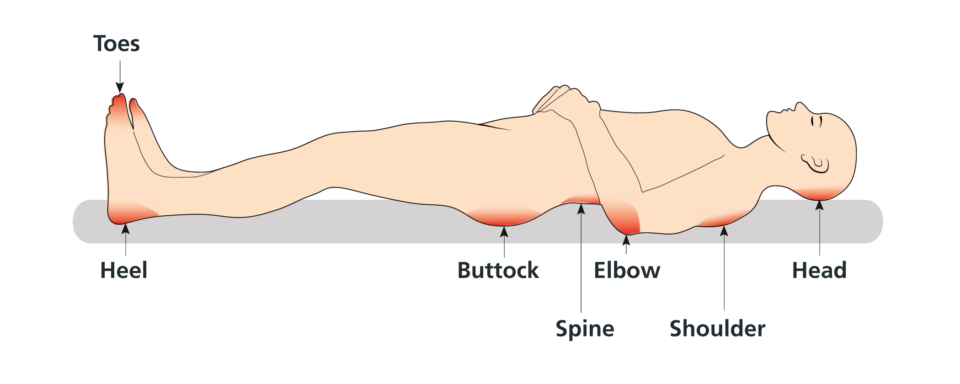
Pressure points when lying on your back
- Heel
- Toes
- Buttock
- Spine
- Elbows
- Shoulders
- Head
Seated
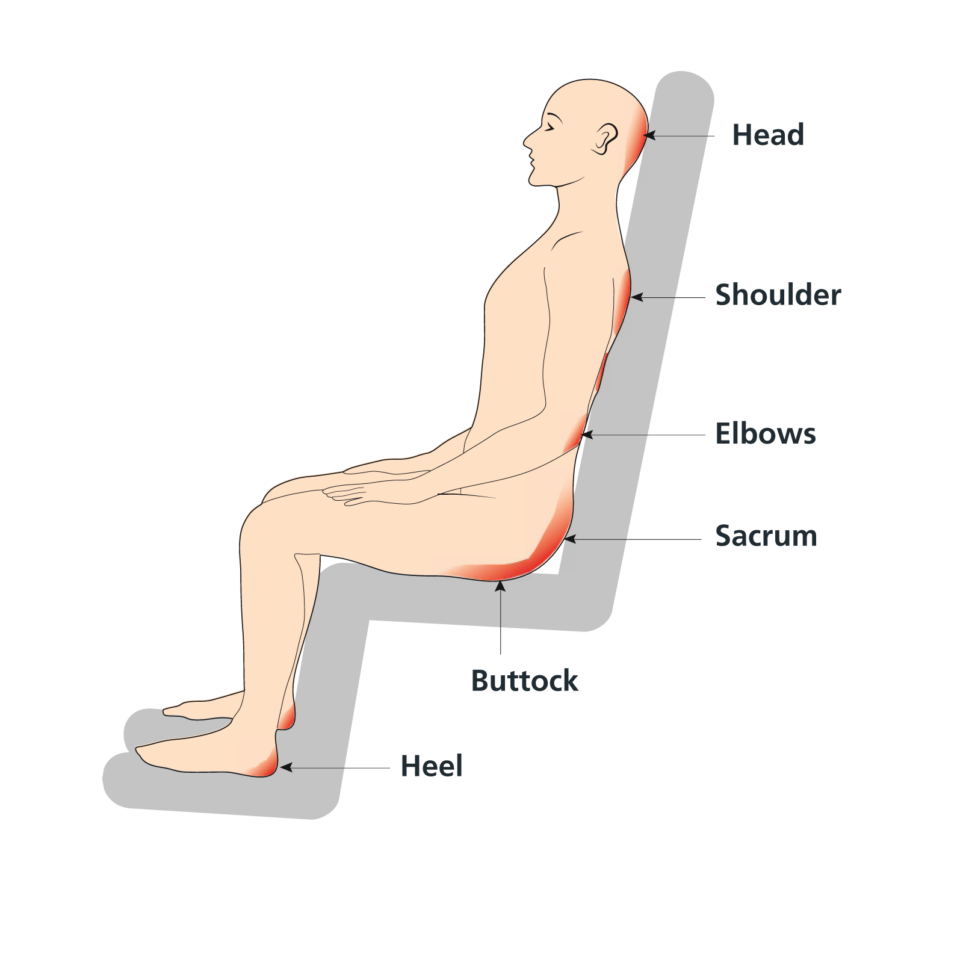
Pressure points when seated
- Heel
- Buttock
- Sacrum (base of the spine)
- Elbows
- Shoulders
- Head
Lying on side
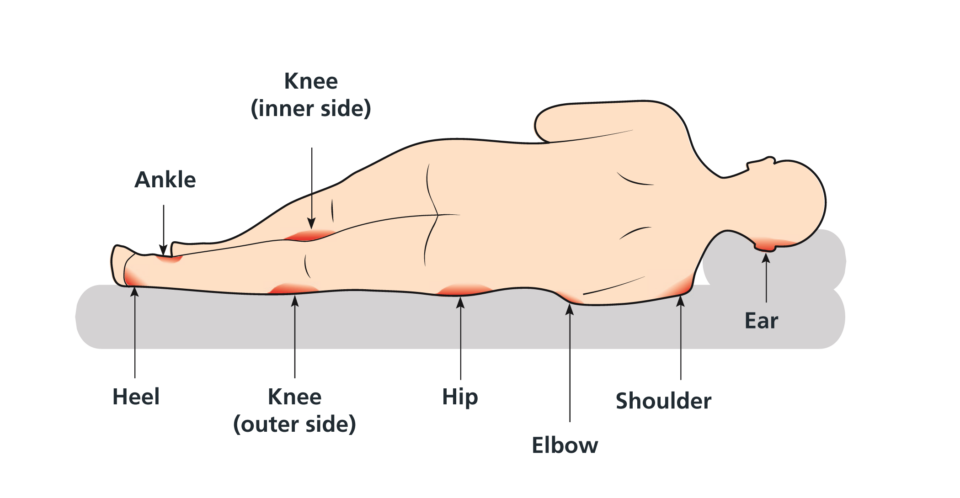
Pressure points when lying on your side
- Heel
- Ankle
- Knees (inner and outer side)
- Hip
- Elbow
- Shoulder
- Ear
What is available for my wheelchair?
We can offer a variety of pressure relieving cushions which when used with a good pressure relief regime, can assist with the prevention of pressure sores.
The cushions we provide have varying pressure risk ratings, from low to very high risk, and are made from a variety of materials including foam, gel and air.
Some pressure issues can be resolved with an upgrade in the cushion material. Others would need a reassessment due to potential postural issues causing the pressure damage.
How to access the service
If you are an existing wheelchair user and are known to Doncaster wheelchair services, contact the team. If you are new to the service, you need to be referred through an accredited referrer, this could be a community therapist, nurse or your GP service.
For pressure care issues not related to your NHS supplied wheelchair, please contact your community nursing team.
Page last reviewed: August 05, 2026
Next review due: August 05, 2027
Problem with this page?
Please tell us about any problems you have found with this web page.
Report a problem